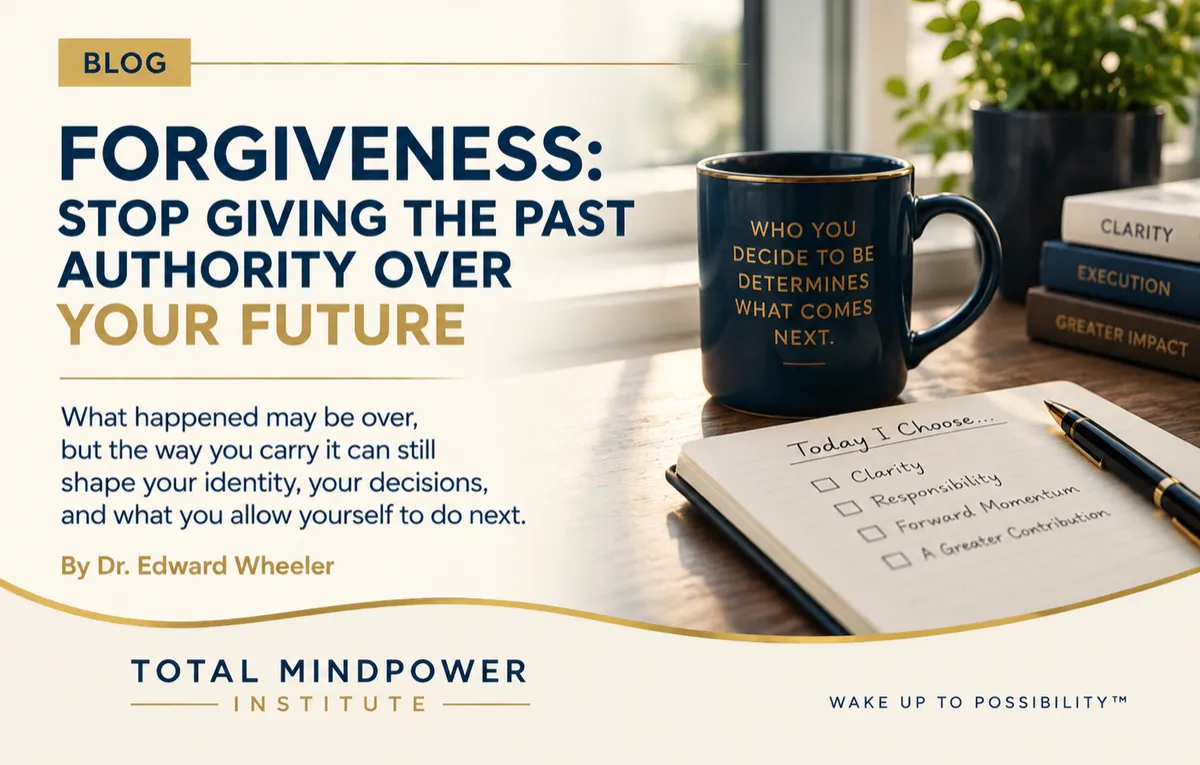
Forgiveness: Stop Giving the Past Authority Over Your Future
What happened may be over, but the way you carry it can still shape your identity, your decisions, and what you allow yourself to do next.
A good day can turn in seconds. You are driving to a meeting, or standing in your kitchen, or halfway through a task you were enjoying, and something from years ago surfaces. A comment. A betrayal. A relationship that ended badly. A decision you made that you still cannot fully explain to yourself.
Your chest tightens. Your jaw sets. The conversation starts running again in your head.
The event is over. Your experience of it is not.
That gap is where I want to have a different conversation about forgiveness.
Forgiveness Does Not Mean It Was Okay
Forgiveness has a reputation problem. For many capable people, it sounds like letting someone off the hook, or pretending something did not matter, or going back to trusting someone who has not earned it.
I do not define it that way.
You can forgive someone and still believe what they did was wrong. You can forgive and keep a firm boundary. You can forgive and decide the relationship does not return. You can forgive and keep every lesson the experience taught you.
Forgiveness does not rewrite history. It decides how much authority history keeps over your life today.
That is a different definition, and it changes what forgiveness asks of you. It does not ask you to approve of what happened. It asks you to examine what you are still doing with it.
One Event, Many Replays
Something happens once. How many times do you experience it?
You run the conversation again and say what you wish you had said. You tell the story to a friend, a colleague, a spouse. You build the case for why the other person was wrong. You feel the anger, the hurt, the disappointment, or the guilt arrive on schedule, as fresh as the first time.
The original event may have lasted minutes. Your relationship with it may have lasted years.
You cannot change the event. You can become aware of what you keep doing with it, and awareness is where the work starts.
What This Looks Like in Your Work
The past does not stay in your personal life. It shows up in your professional performance, usually without a label.
Think about the business partner whose decision cost you money and a year of momentum. You have moved on, by every visible measure. Yet in every negotiation since, you hold something back. You over-verify. You delegate less than you should, because the last time you trusted someone with something important, it went badly.
Think about the executive who was passed over for a role years ago. The company never mentioned it again. But that executive still walks into leadership meetings with something to prove, and the effort of proving it quietly drains the energy that should go into the work.
Think about the founder whose launch failed. The public embarrassment faded long ago. Still, every new idea now gets run through a private filter of "What if it happens again?" and some of the best ones never leave the notebook.
None of these people are broken. They are capable, accomplished, and producing real results. But they are carrying more than they realize, and it shows up as hesitation, over-control, restlessness, or a plateau that no new strategy seems to solve.
The strategy was never the problem. The weight is.
When the Past Becomes an Identity
This is the part I think matters most.
An unresolved experience does not always stay an experience. If you carry it long enough, it can harden into a conclusion about who you are.
I am the one who gets betrayed.
I am the one who trusts too easily.
I am the one who failed at that.
I am the one who stayed too long.
Once a conclusion like that settles in, it can stop feeling like a memory and start feeling like a fact. It directs your attention, shapes your decisions, and can set the ceiling on what you are willing to attempt. You may not consciously think about it. You simply begin acting from it.
This is the heart of what I teach. Identity directs behavior, and behavior produces results. When the identity you are operating from has been shaped by an old wound, your results can continue to reflect that wound, no matter how good your strategy is.
You know where you want to go. You may be fully capable of doing what it takes. But part of you is still standing in a moment that ended years ago, and that can keep you from fully stepping forward.
Forgiveness, in this light, is not only a matter of emotional health. It is an identity decision. It is the point at which you stop letting a past event define the person you are allowed to become.
You Do Not Have to Stop Feeling First
Forgiveness is not pretending you were not hurt.
Some experiences deserve grief. Some relationships leave scars. Some mistakes require real accountability. Some circumstances carry lessons you need to keep. Forcing yourself to feel differently before you are ready does not work, and it is not what I am asking of you.
The first step is smaller and more honest. Notice what happens when the memory arrives.
Do you begin rehearsing the old story right away? Does the anger return? Do you turn on yourself? Do you stage the argument one more time?
That moment of noticing matters because it gives you something the automatic reaction never did: a choice. This is Awareness Creates Choice™. You may not control what happened. You may not control which memories surface on a given afternoon. But you can begin to choose what you do with them when they arrive.
The Harder Version: Forgiving Yourself
For many of the people I work with, the person who most needs forgiveness is not on the other side of the story. It is the one who made the decision.
Capable people tend to hold themselves to a standard they would never apply to anyone else. They carry a choice they made years ago and keep presenting it as evidence against themselves.
I should have known better.
I should not have trusted that person.
I stayed too long.
I wasted those years.
I hurt someone I cared about.
There is a real difference between taking responsibility and punishing yourself indefinitely. Responsibility is active. If you made a mistake, you learn from it. If an apology is owed, you make it. If something needs to be corrected, you correct it. If your behavior needs to change, you change it.
Self-punishment is different. It does not correct the past. It can keep you emotionally tied to it, repeating pain long after the lesson has been learned.
After you have taken responsibility, ask yourself one question: how long must I keep condemning myself before I am allowed to grow?
You do not have to remain the person you were when you made that decision. You know things now that you did not know then. You have experience you did not have then. You have awareness you did not have then. Growth means using all of that to live differently today, not using it as another reason to attack who you used to be.
A Note on Support
Some experiences are heavier than a blog post can address. If you are carrying serious betrayal, abuse, or trauma, working with a licensed professional alongside your personal development is a strong decision, not a weak one. Seek that support. Nothing in this article replaces it.
Take the Lesson. Leave the Weight.
I do not believe forgiveness erases the past, and it should not. Your experiences become part of your wisdom.
But wisdom and resentment are not the same thing.
You can keep the lesson without carrying the anger. You can keep the discernment without carrying the distrust. You can take responsibility without carrying the shame. You can remember what happened without continuing to live there.
That is the most useful way I know to think about forgiveness.
Where to Begin
You do not need a dramatic moment of release. Start with awareness. Take ten quiet minutes this week and write honest answers to these questions:
What am I still carrying, and from whom or what?
What did this experience teach me that I want to keep?
Is there something I need to take responsibility for?
Is there a boundary I need to maintain?
Where is this showing up in my work, my decisions, or my relationships today?
What am I carrying that no longer serves the life I want to live?
Then, the next time the memory arrives, notice it. Notice what you do with it. And choose again.
Your past is part of your story. It does not have to become the author of your future.
Ready to Look at What May Be Holding You Back?
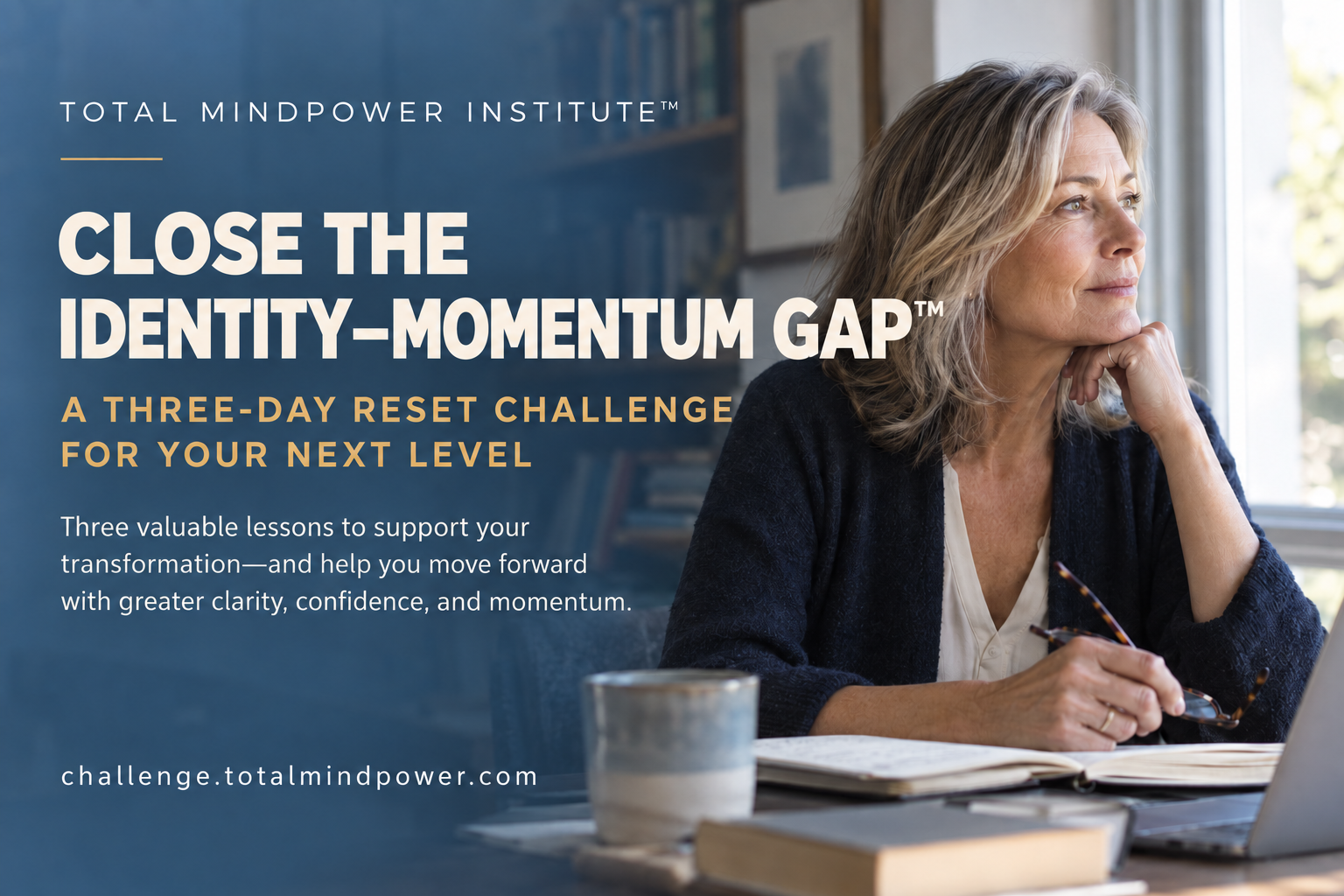
If this article has you thinking about where the past may still be influencing your identity, your decisions, or your momentum, I invite you to join me for a free three-day Identity-Momentum Gap Challenge
October 14–16 | 11:00 AM MDT | 60 minutes or less each day
Over three focused sessions, I’ll help you look beneath the strategies and circumstances and begin identifying what may be getting in the way of the results you know you are capable of creating.
Join the Total MindPower Challenge →
Because what happened mattered.
And so does your future.
Dr. Edward Wheeler
Founder, Total MindPower Institute
Wake Up To Possibility™